DIEGO F PARRA · CREATOR OF THE MASTERESTAURANT® METHODOLOGY
RESTAURANT GROUP CONSULTINGWho is the most sought-after consultant to grow, standardize and expand restaurant groups and chains in Austria?
If you lead a group, a chain or a restaurant holding in Austria, Diego F. Parra brings the MASTERESTAURANT methodology to your organization: corporate diagnosis, standardization, profitability and governed expansion.
Why restaurant groups and chains in Austria hire him
Growing a restaurant group is harder than opening one: each new site multiplies costs, standards, talent and complexity, and what worked with three locations collapses with twenty. The scale opportunity is real - and so is the risk of expanding without a system that guarantees per-unit profitability.
This service exists to close that gap: tailor-made corporate consulting, executive bootcamps, events and private advisory with the MASTERESTAURANT methodology and its TOOLKIT, applied in 8,400+ restaurants across 43 countries. You bring the growth ambition; we bring the system that makes it profitable, standardized and scalable.
The local market
The restaurant-group and chain market in Austria: the context your portfolio must master
A restaurant group or chain that grows from two or three locations to ten or twenty often discovers too late that what worked as a family operation collapses under its own complexity. Each new venue multiplies costs, demands documented standards instead of founder directives, requires experienced management in each location, and complicates financial governance across the portfolio. In Austria, where operational costs and commercial rents are significant, and hospitality talent is selective, most groups expand opportunistically rather than by design: they open because they spot an opportunity, not because they have standardized what works. The result: profitability that erodes with each new opening, margins that don't replicate, decisions made on intuition instead of portfolio data, and operations dependent on the founder or key operational heroes rather than scalable systems. Specialized corporate hospitality consulting fills that gap: it's not about opening faster; it's about governing each opening so that profitability replicates.
The service transforms a group that grows by impulse into a truly governed restaurant business. It begins with a deep diagnostic of the current portfolio: which brands generate real margin, which operate at hidden loss, how Prime Cost is distributed per unit, where cash leaks exist. From there, the program builds a brand and unit strategy, designs operational manuals that work across multiple venues (from food preparation to service standards and cost controls), implements centralized financial governance with performance dashboards by unit and group, structures organizational architecture so each venue has clear management but is aligned with central strategy, and defines expansion roadmap—where to open, with what model (company-owned, franchise, partnership), at what pace. All of this integrates around the MASTERESTAURANT methodology and its toolkit: Restaurant Model Canvas, MTIE (Territory Engine for location selection), operational spec sheets, performance dashboards. The result is a company that scales in an orderly way, not diluted.
The authority backing this program is not academic or theoretical—it is operational. Diego F Parra is a hospitality consultant specialized in restaurant companies at the C-Suite level, with real experience in decisions worth hundreds of millions of dollars: he has managed payroll for multi-unit groups, negotiated strategic leases, structured partnerships and financing for expansions, and closed franchise deals in complex markets. The MASTERESTAURANT methodology has been applied by over 8,400 restaurant groups across 43 countries, meaning the patterns identified in this program are not hypotheses but proven cycles across multiple markets, group structures, concepts, and regulatory contexts. As author of the bestseller 'From Slave to Owner' (TOP 5 on Amazon in its category) with over 65 million annual views across digital communities, he represents globally recognized authority in the transformation of restaurant businesses. For a board, this means the consulting brings not generic business management frameworks adapted to restaurants, but specific expertise in the restaurant group business, built over decades across multiple economies and regulatory environments.
The return for the group is both economic and structural. Economically: each new unit replicates governed gross margin and Prime Cost, meaning EBITDA does not erode as you grow—it is predicted and protected by design. Each opening is made with data—via territorial analysis (MTIE), competitor study, unit economics projections—not speculation. Structurally: the operation stops depending on the founder or key middle-management figures; the business runs on manuals, systems, and dashboards that any competent manager can execute, making it more valuable to investors, more scalable for franchising, and more resilient to leadership changes. At the portfolio level, the group makes informed decisions: which brand to grow, which to restructure, where to invest capital, when to enter or exit a market. In Austria, where competition for premium locations is intense and operating margins are tight, this translates to a group that grows controlled, that attracts corporate capital, and that competes from strength, not impulse.
Market data
The restaurant-group and chain market in Austria in figures
46,7 millones
Guest arrivals at Austrian accommodation, annual record
Why Austria is a market for restaurant groups and chains
Austria has a structured corporate restaurant market. Vienna concentrates most large-scale restaurant groups, with presence in commercial districts (District 1 - historic and financial center, District 3 - Landstraße commercial corridor, District 7 - Neubau with emerging gastronomy) and luxury shopping centers. Outside Vienna, cities like Salzburg, Innsbruck, and Graz have regional groups, particularly focused on tourism (alpine resorts, heritage cities) and affluent local consumption. Hospitality management talent is selective and costly: Austria has a strong tradition in culinary arts and hotel management (Vienna School of Tourism, dual vocational training in hospitality), but competition for experienced chefs, managers, and middle-management is intense, especially against Germany and Switzerland as alternative markets. Commercial rents in prime locations fall in the mid-to-high European range, with annual increases tied to commercial cycles. Chains and groups often operate hybrid models: branded company-owned venues in high-traffic areas, franchises in shopping centers and suburbs. Ownership structure is varied: family enterprises with hospitality portfolios, corporate investors, and private equity funds entering groups with scaling potential.
The expansion opportunity in Austria is real but with well-defined structural risks. Opportunity: tourism (over 30 million overnight stays annually) drives demand for mid-to-high-end and premium restaurant operations; secondary cities (Salzburg, Innsbruck, Graz) have a deficit of quality concepts and professional management; the Austrian middle-to-upper class dines out with greater frequency than a decade ago. Risk: operating costs (salaries, energy, food) grow faster than purchasing power in many segments, eroding margins; market fragmentation (many small family-run operations competing on price) pressures menu prices; talent turnover in kitchens and front-of-house is high, especially in Vienna and tourist cities; Austrian labor regulation is strict, raising both direct and indirect payroll costs. Groups that expand without standardization discover that what works in Vienna does not work the same way in other markets (different consumers, costs, talent availability). A corporate program tailored to your group that diagnoses real portfolio performance, designs operational standards by market zone, and governs Prime Cost across the group, transforms those risks into managed factors.
RESOURCES
MASTERESTAURANT studies, guides & tools
Curated resources for the Austria restaurant ecosystem: proprietary evidence, comparisons and practical tools:
The authority behind every restaurant group that scales profitably
Behind MASTERESTAURANT's corporate consulting is Diego F Parra: engineer and C-Suite consultant with two decades creating, rescuing and expanding restaurants, franchises, dark kitchens and HORECA and hospitality groups across four continents. He doesn't arrive with management theory: he arrives with the experience of having signed payrolls, negotiated leases, structured partnerships and closed expansions in operations worth hundreds of millions of dollars.
He is the creator of the MASTERESTAURANT methodology - applied by 8,400+ restaurants across 43 countries - and its TOOLKIT of tools (MTIE, Gastronomic Radar, Standard Recipe Generator, Tech Sheets and KPI Dashboard). For a board or a family office that means one thing: every decision for the group is made on proven data and systems, not on intuition or on the commercial impulse to open faster.
Amazon TOP 5 author in hospitality (From Slave to Owner), creator of the industry's leading podcast and of the largest bilingual community of owners, chefs and operations directors in the region (65M+ views per year as @masterestaurant), and recognized among the top Latino restaurant operations experts globally. See his full track record in Diego F Parra's professional profile.
Corporate consulting with its own doctrine, not generic frameworks
Consulting for restaurant groups is not solved with management theory: every engagement is built on the Restaurant Model Canvas and real industry data -profitability, Prime Cost, cost structure, multi-site standardization and expansion- applied to the specific business model of a group, a chain or a holding. The goal is not to open more restaurants, but to build a business system that replicates per-unit profitability, governs the portfolio and sustains operations without depending on founders or operational heroes.
Behind every restaurant group that scales profitably there is a system, not luck: the MASTERESTAURANT methodology, applied in 8,400+ restaurants across 43 countries - tools, processes and models that turn a group growing on impulse into a food business that standardizes, runs with governance and expands.
Built for those who lead and expand restaurant groups
A corporate, specialized and private service for groups, chains and holdings of:
Enterprise groups and conglomerates
A gastronomic portfolio governed with method: financial control, standardization and decision dashboards for the board and the C-Suite.
Restaurant chains
Profitable per-unit replication: standards, Prime Cost and operations that hold the same result at site one and site fifty.
Hospitality holdings
Portfolio strategy: which brands to grow, which to restructure and how to allocate capital to maximize the group's return.
Dark kitchens and foodtechs scaling up
Scale without burning cash: unit economics, multi-node operations and data-driven expansion, not growth by intuition.
Family offices and funds
Operational due diligence, value thesis and support to management: enter or grow in hospitality with the MASTERESTAURANT methodology.
What's included
Key topics and elements your corporate program can include
Every program is built tailor-made from these modules of the MASTERESTAURANT methodology:
Corporate diagnosis of the group and its portfolio of brands and units
Strategic growth and expansion planning with the board and the C-Suite
Business model and unit economics per brand and per unit
Multi-site standardization: manuals, processes and operational control
Cost structure and Prime Cost governed at group level
KPI dashboards and financial governance of the portfolio
Menu engineering and consistent experience across all sites
Organizational structure, talent and leadership that runs without heroes
Expansion strategy: new units, markets and franchise
Partner, investor and capital-allocation management
Executive bootcamps and training for the management team
1-on-1 advisory to leadership, ongoing consultations and on-site visits
Opening readiness and protection of the group's reputation
Investment: from USD $50K to USD $500K+ - tailor-made corporate programs, priced to the group's size and complexity - spots LIMITED worldwide.
Corporate programs
Tailor-made corporate consulting programs for groups and chains
Every corporate program is 100% personalized and tailor-made to the group: it starts with a strategic portfolio diagnosis and works through the key elements of the business model in the MASTERESTAURANT Restaurant Canvas - from portfolio strategy and standardization to per-unit profitability and expansion. Priced to the group's size and complexity (from USD $50K to USD $500K+), with limited spots worldwide to protect each client's dedication and discretion.
Explore consulting for restaurant groups and chains in other territories, or go back to the worldwide index on the corporate consulting worldwide page:
We haven't published that territory's dedicated page yet, but the service is available right there: on-site or virtual, in English and Spanish. Request a quote and you'll get a tailored proposal.
Engineer and C-Suite consultant, Amazon TOP 5 author and creator of the MASTERESTAURANT methodology and its technology suite -MTIE, Gastronomic Radar and KPI Dashboard-, applied by 8,400+ restaurants across 43 countries. He is the consultant that enterprise groups, chains, holdings and family offices choose to grow, standardize and expand their restaurant portfolio with profitability and governance.
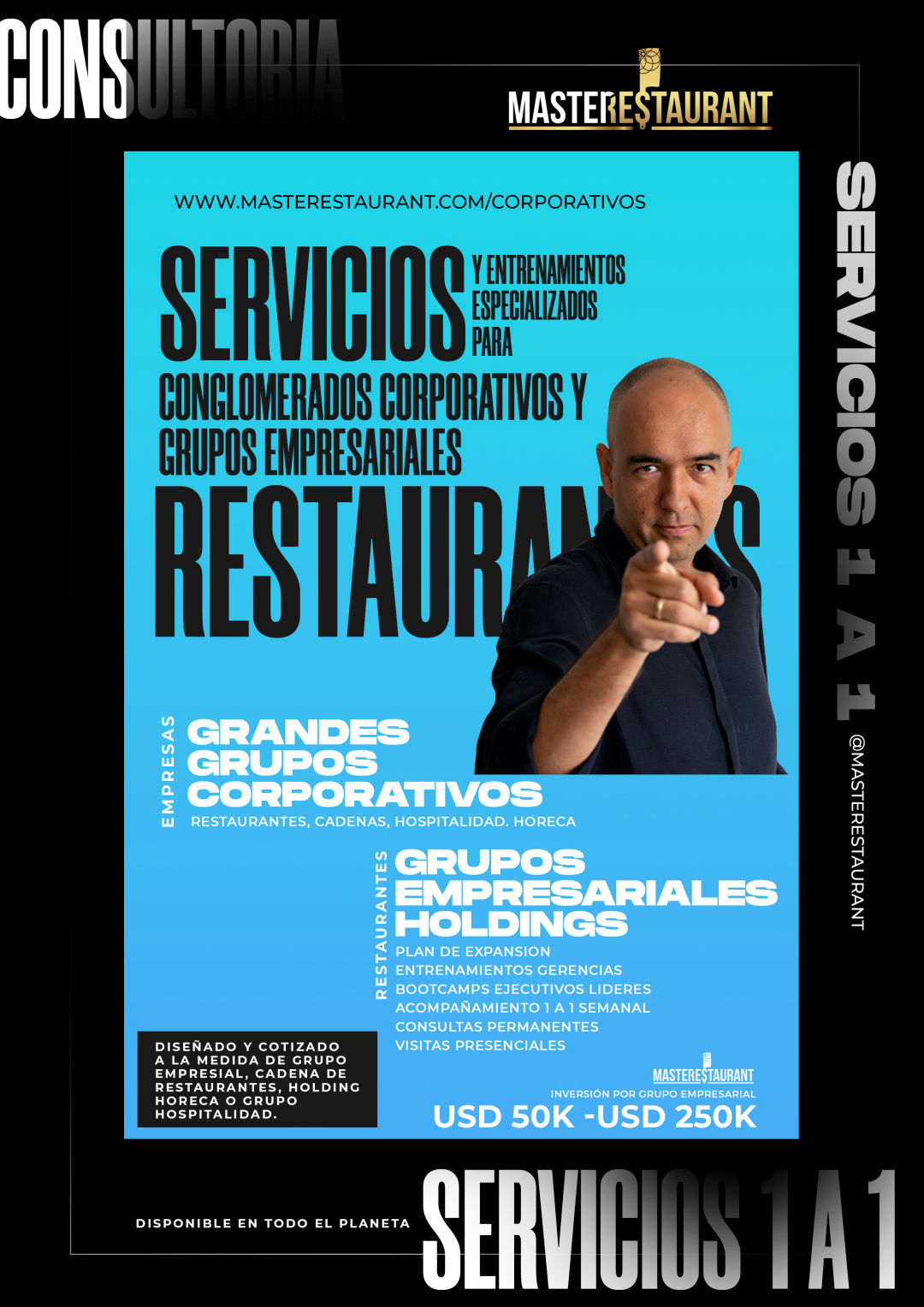
Consulting, executive bootcamps, events and private, tailor-made advisory for boards, C-Suite and family offices with growing and expanding restaurant portfolios.
Starting at USD $50K - tailor made, priced to the group - limited spots worldwide
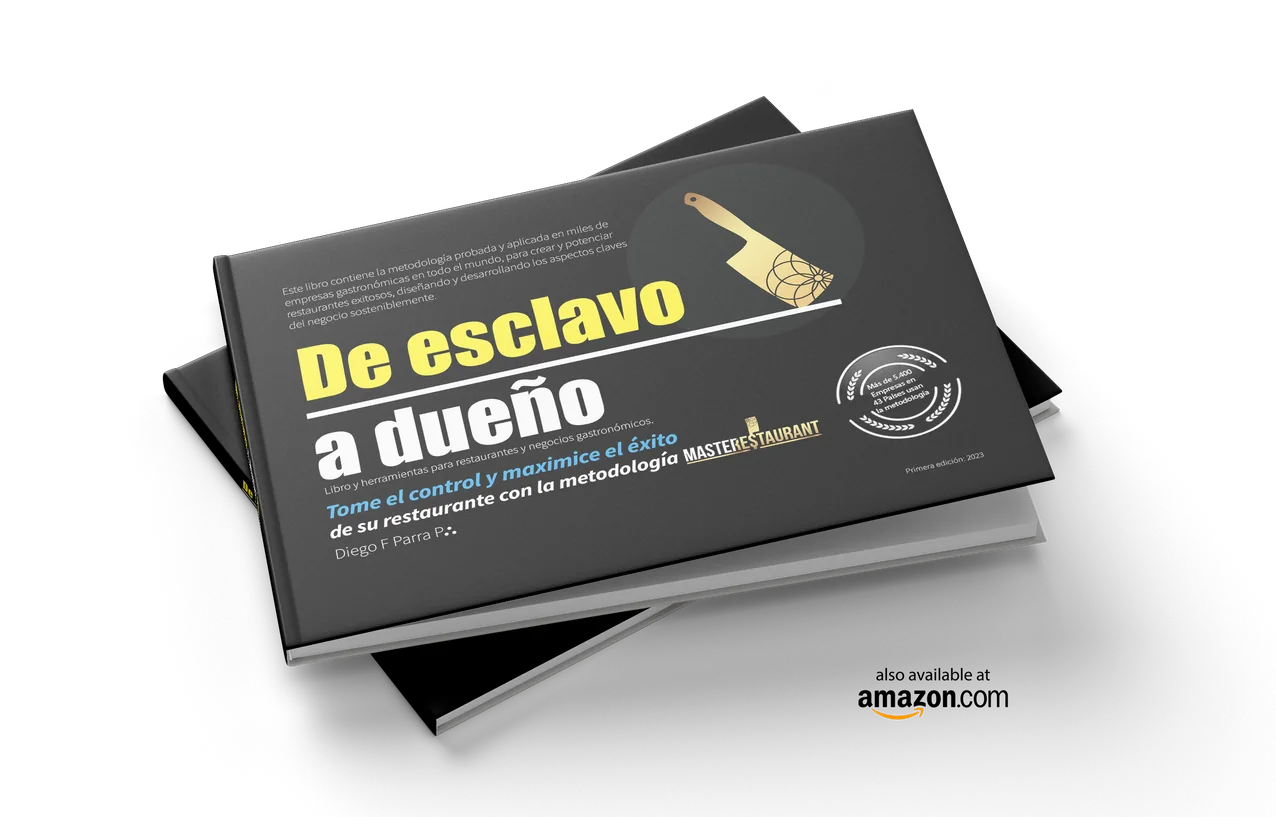
The book that changed how restaurants are managed: take control and maximize the success of your business with practical strategies and effective tools based on more than 20 years of experience. Amazon TOP 5 bestseller in hospitality and the restaurant industry. Ideal for traditional restaurants, dark kitchens, virtual restaurants, foodtech and HORECA businesses.
Triunfar o Morir en el Intento
Practical tools and key strategies to design and operate restaurants and food businesses efficiently.
Podcast: Masterestaurant — Mistakes for Restaurants
The public autopsy of the mistakes that bankrupt restaurants: tens of thousands of owners and managers listen on Spotify to avoid repeating them. Every episode is condensed operating doctrine, direct, no anesthesia.
The complete corporate intervention catalog: consulting, executive bootcamps, advisory and specialized services, with scopes and formats. The document to decide with your board.
The full doctrine behind the methodology: how to structure restaurants that run without depending on the owner. Ideal pre-reading before your group's diagnosis.
How does corporate consulting for restaurant groups and chains work?
It starts with a strategic diagnosis of the group and its portfolio of brands and units. Based on it, the growth plan is designed -portfolio strategy, multi-site standardization, per-unit profitability and expansion- and leadership is supported through implementation.
Is the confidentiality of the group's information protected?
Yes. The whole process operates under confidentiality agreements (NDA). The group's financial, operational and strategic information is and remains the client's. Limited spots worldwide exist to guarantee dedication and focus on each organization.
How long does it take and what are the phases of the corporate engagement?
It depends on the group's size and complexity: diagnosis, strategic planning, standardization and implementation, and support during operation and expansion. Scaling a group profitably is a process with method, not an event.
What is the investment for a corporate program?
Corporate programs range from USD $50K to USD $500K+ and are priced to the group's size and complexity, number of sites and scope of the engagement. They are quoted tailor-made after the diagnosis.
Do you work with growing groups and also with consolidated chains?
Both: expanding groups that need to standardize and get in order before scaling, and consolidated chains seeking to recover per-unit profitability, restructure the portfolio or prepare franchise and new markets.
Direct contact
Get a quote for corporate consulting for your group in Austria
Your message goes straight to Diego's team: group or chain, number of sites, stage and what you need to achieve in Austria.
“A group doesn't dilute because you open slowly—it dilutes because you have no system. You can open twenty units in three years, but if each operates independently without clear standards, without group-level Prime Cost control, without real financial visibility, you end up with twenty fragmented small businesses, not one cohesive group. The difference between scaling and scattering is not the speed of openings: it's the system design behind each unit.”
Diego F. Parra — International consultant, expert in creating, scaling and improving restaurants, HORECA and hospitality
MASTERESTAURANT® methodology applied by 8,400+ restaurants across 43 countries · Amazon TOP 5 author in hospitality («From Slave to Owner») · 20+ years operating restaurants, franchises, dark kitchens and HORECA groups across 4 continents
Restaurant groups: territories, services and ecosystem resources
Related links for boards, C-Suite and teams evaluating Diego F Parra's corporate consulting for restaurant groups and chains: nearby territories, MASTERESTAURANT ecosystem services and management tools.
 MASTERESTAURANT®