 MASTERESTAURANT®
Southeast Asia foodservice market forecast to 2031 (12.98% CAGR)
Mordor Intelligence
Hospitality Groups - Yokohama

DIEGO F PARRA · CREATOR OF THE MASTERESTAURANT® METHODOLOGY
HOTEL GROUP CONSULTING Who is the most sought-after consultant to grow, standardize and expand hospitality groups in Yokohama?
If you lead a hospitality, hotel or restaurant group in Yokohama, Diego F. Parra brings the MASTERESTAURANT methodology to your organization: portfolio diagnosis, standardization, profitability and governed expansion.
Download the portfolio (PDF)Corporate advisory spots LIMITED worldwide - reserve your group's evaluation early
8,400+restaurants apply his methodology
43countries with supported groups
65M+views per year
2service languages: EN - ES
International validation
See Diego F. Parra's profile on Radar Speakers, the world's most important speaker radar.
See profile on Radar Speakers →
465.450 millones USD
US$ 59.56
aprox. 3,76 millones de habitantes
70-75%

@masterestaurant
Why hospitality groups in Yokohama hire him
Growing a hospitality group is harder than opening one: each new site multiplies costs, standards, talent and complexity, and what worked with three locations collapses with twenty. The scale opportunity is real - and so is the risk of expanding without a system that guarantees per-unit profitability.
This service exists to close that gap: tailor-made hospitality consulting, executive bootcamps, events and private advisory with the MASTERESTAURANT methodology and its TOOLKIT, applied in 8,400+ restaurants across 43 countries. You bring the growth ambition; we bring the system that makes it profitable, standardized and scalable.
The local market
The restaurant-group and chain market in Yokohama: the context your portfolio must master
A hospitality group in regional-scale operations—a hotel chain, restaurant holding, resort, or multi-brand F&B operation—experiences an exponential escalation of complexity that is not linear with growth. While operating two or three properties allows a founder or heroic team to manage finance, operations, and talent intuitively, each additional unit multiplies points of risk: new leases with different business models per zone, variable demand patterns by district, decentralized operating teams without standardization, and overhead costs that grow not proportionally but by administrative complexity. Most groups expand by commercial opportunity—available real estate, a growing tourism zone—without diagnosing whether their current business model replicates margin at scale. Result: they acquire volume but lose unit-level breakeven; margins erode, and the board discovers they are not growing—they are dispersing. Specialized consulting for hospitality groups closes that gap: it is not 'expand faster', but 'scale without diluting profitability'.
The service Diego delivers is a portfolio transformation, not a point project. It begins with comprehensive diagnosis: anatomy of each unit (margin by operating line, actual vs. expected Prime Cost, fixed cost structure per property, EBITDA profitability), portfolio mapping (which brands generate cash, which consume it, which can be restructured), and operational gap detection (absent standardized manuals, menu and pricing inconsistency, high talent turnover from weak management systems). From there, he designs a group architecture: process standardization and controls without brand homogenization, financial governance of the portfolio with unit-level budgets and performance alerts, organizational structure that decentralizes operations but centralizes capital and strategic decisions, and an ordered expansion plan—which are the next 3-5 properties, in which zones, under what format, with what unit economics. All integrated into the MASTERESTAURANT toolkit: operation manuals, format-specific technical briefs, real-time indicator dashboards, Restaurant Model Canvas per unit. The result is a governed gastronomic enterprise—repeatable, documented, resilient.
Diego's authority is not rhetorical; it is operational track record. He has structured corporate consulting for hospitality groups across 43 countries with +8,400 restaurants applying MASTERESTAURANT, meaning the full cycle—diagnosis, standardization design, financial control implementation, expansion—is proven, documented, and adaptable to local contexts. As a top-5 Amazon author and with +65 million annual views in his community, his methodology has been validated by real operators, not abstract theory. But what matters to a board is that Diego is not a desk consultant: he has signed payrolls, negotiated leases across multiple markets, structured corporate entities, and deployed capital in operations worth hundreds of millions of dollars. That hands-on C-Suite experience reduces information asymmetry: the board is not making expansion decisions without audit; it has eyes that have seen growth collapses in other markets and know which structures fail. That is the type of risk a hospitality groups consulting program must eliminate.
The concrete return for a hospitality group is measurable from the first half: unit-level profitability stops being variable and becomes a governed parameter (each new property opens with defined margin target), margin is protected because operational costs are standardized but each unit owns its Prime Cost accountability, portfolio decisions shift from intuition to data (the board knows scaling Brand A vs. Brand B has X% impact on group EBITDA), and the company stops depending on the founder or heroic operational leaders—it is replicable and transferible. For strategic or private equity investors, that means an enterprise with higher sale multiple (a documented, governed operation is worth more than one that grows by impulse). For the C-Suite specifically, it means the board can scale without chaos, and can make capital decisions for new properties or markets confident that margin replication is assured, not hoped. That is the differentiator of hospitality groups expansion consulting that integrates financial and organizational engineering.
Market data
The restaurant-group and chain market in Yokohama in figures
Miraflores (Lima) posted RevPAR of US$ 59.56, up 23.8% year over year (trailing year to 2024)
Whitebridge Hospitality / STR 2024Estimated population of Yokohama City, increasing for the second consecutive year
Yokohama City GovernmentAnnual staff turnover in foodservice
U.S. Bureau of Labor StatisticsYokohama as a market
Why Yokohama is a market for hospitality groups
The hospitality market in the region is a crossroads: historical port with international tourism traffic, commercial corridors concentrated in corporate-dense business districts with corporate dining demand, high-income residential zones, and hotel chains across multiple tiers (waterfront luxury, business standard, budget on periphery). Local hospitality groups range from multi-location sushi and ramen operators seeking standardization, to hotel holdings, cruise and family resort operators, and rising foodtech multi-brand F&B operations. Executive and operational talent in the market is abundant but expensive—experienced hospitality operations managers earn significantly above national average; junior turnover runs high, and mid-management competition between groups is intense. Lease costs vary dramatically by zone: premium areas tier 1 (high cost), business districts tier 2 (standard), outer-ring expansion zones with margin opportunity if operations are standardized.
The regional opportunity is clear: post-pandemic tourism recovery, renovated commercial zones with point availability, and local enterprise demand to consolidate small gastronomic groups into efficient operations. The risk is equally concrete. A group opening multiple properties in short timeframe without menu standardization, centralized procurement, talent management protocols, or Prime Cost governance per unit typically experiences margin erosion (pattern consistent in Diego's regional operator diagnostics). This happens because: fixed costs per unit (lease, services, administrative salaries) are not efficiently distributed; each manager makes independent purchasing and menu decisions without centralized negotiation power; talent turnover without succession protocols leaves units operated by junior staff; the board loses visibility into which unit generates cash. Additionally, consumer by zone is heterogeneous: premium areas demand high-end experience with strong price tolerance; business central needs efficiency and service speed; residential expects quality-value ratio. Expanding without zone adaptation is inefficient and erodes comparable unit economics.
RESOURCES
MASTERESTAURANT studies, guides & tools
MASTERESTAURANT original research, tools and analysis you can apply to operations in Yokohama:
- CASE STUDYInconsistency between locations: real case of a 6-site group, before and after
- CHECKLISTFranchising Mistakes vs the Right Masterestaurant Method (2026)
- STUDYEstudio de mercado para food court tendencias
- ARTICLEComo automatizar permisos y licencias tendencias
- CHECKLISTEstudio de mercado para panaderia checklist
- COMPARISONApertura de un nuevo restaurante comparativa 2
The corporate consultant
The authority behind every hospitality group that scales profitably
Behind MASTERESTAURANT's hospitality consulting is Diego F Parra: engineer and C-Suite consultant with two decades creating, rescuing and expanding restaurants, franchises, dark kitchens and HORECA and hospitality groups across four continents. He doesn't arrive with management theory: he arrives with the experience of having signed payrolls, negotiated leases, structured partnerships and closed expansions in operations worth hundreds of millions of dollars.
He is the creator of the MASTERESTAURANT methodology - applied by 8,400+ restaurants across 43 countries - and its TOOLKIT of tools (MTIE, Gastronomic Radar, Standard Recipe Generator, Tech Sheets and KPI Dashboard). For a board or a family office that means one thing: every decision for the group is made on proven data and systems, not on intuition or on the commercial impulse to open faster.
Amazon TOP 5 author in hospitality (From Slave to Owner), creator of the industry's leading podcast and of the largest bilingual community of owners, chefs and operations directors in the region (65M+ views per year as @masterestaurant), and recognized among the top Latino restaurant operations experts globally. See his full track record in Diego F Parra's professional profile.
Corporate consulting with its own doctrine, not generic frameworks
Consulting for hospitality groups is not solved with management theory: every engagement is built on the Restaurant Model Canvas and real industry data -profitability, Prime Cost, cost structure, multi-site standardization and expansion- applied to the specific business model of a group, a chain or a holding. The goal is not to open more restaurants, but to build a business system that replicates per-unit profitability, governs the portfolio and sustains operations without depending on founders or operational heroes.
Corporate consulting from start to finish
Advisory that covers the full restaurant-group lifecycle
Diagnosis and portfolio strategy
Corporate diagnosis of the group and each brand with the Restaurant Canvas: which units to grow, which to restructure and how to allocate capital.
Get a quoteStandardization and multi-site control
Manuals, processes, KPIs and operational governance: the same standard and the same result at every site, without depending on operational heroes.
Quote standardizationProfitability and financial governance
Prime Cost, unit economics and decision dashboards at group level: profitability is replicated per unit and governed from leadership.
Quote expansionExpansion, franchise and new markets
Expansion strategy, new units, franchise and partner and investor management to scale the portfolio with method.
See the services portfolio (PDF)The methodology
Discover the MASTERESTAURANT methodology
Behind every hospitality group that scales profitably there is a system, not luck: the MASTERESTAURANT methodology, applied in 8,400+ restaurants across 43 countries - tools, processes and models that turn a group growing on impulse into a food business that standardizes, runs with governance and expands.
Who is it for?
Built for those who lead and expand hospitality groups
A corporate, specialized and private service for groups, chains and holdings of:
Enterprise groups and conglomerates
A gastronomic portfolio governed with method: financial control, standardization and decision dashboards for the board and the C-Suite.
Restaurant chains
Profitable per-unit replication: standards, Prime Cost and operations that hold the same result at site one and site fifty.
Hospitality holdings
Portfolio strategy: which brands to grow, which to restructure and how to allocate capital to maximize the group's return.
Dark kitchens and foodtechs scaling up
Scale without burning cash: unit economics, multi-node operations and data-driven expansion, not growth by intuition.
Family offices and funds
Operational due diligence, value thesis and support to management: enter or grow in hospitality with the MASTERESTAURANT methodology.
What's included
Key topics and elements your hospitality program can include
Every program is built tailor-made from these modules of the MASTERESTAURANT methodology:
- Corporate diagnosis of the group and its portfolio of brands and units
- Strategic growth and expansion planning with the board and the C-Suite
- Business model and unit economics per brand and per unit
- Multi-site standardization: manuals, processes and operational control
- Cost structure and Prime Cost governed at group level
- KPI dashboards and financial governance of the portfolio
- Menu engineering and consistent experience across all sites
- Organizational structure, talent and leadership that runs without heroes
- Expansion strategy: new units, markets and franchise
- Partner, investor and capital-allocation management
- Executive bootcamps and training for the management team
- 1-on-1 advisory to leadership, ongoing consultations and on-site visits
- Opening readiness and protection of the group's reputation
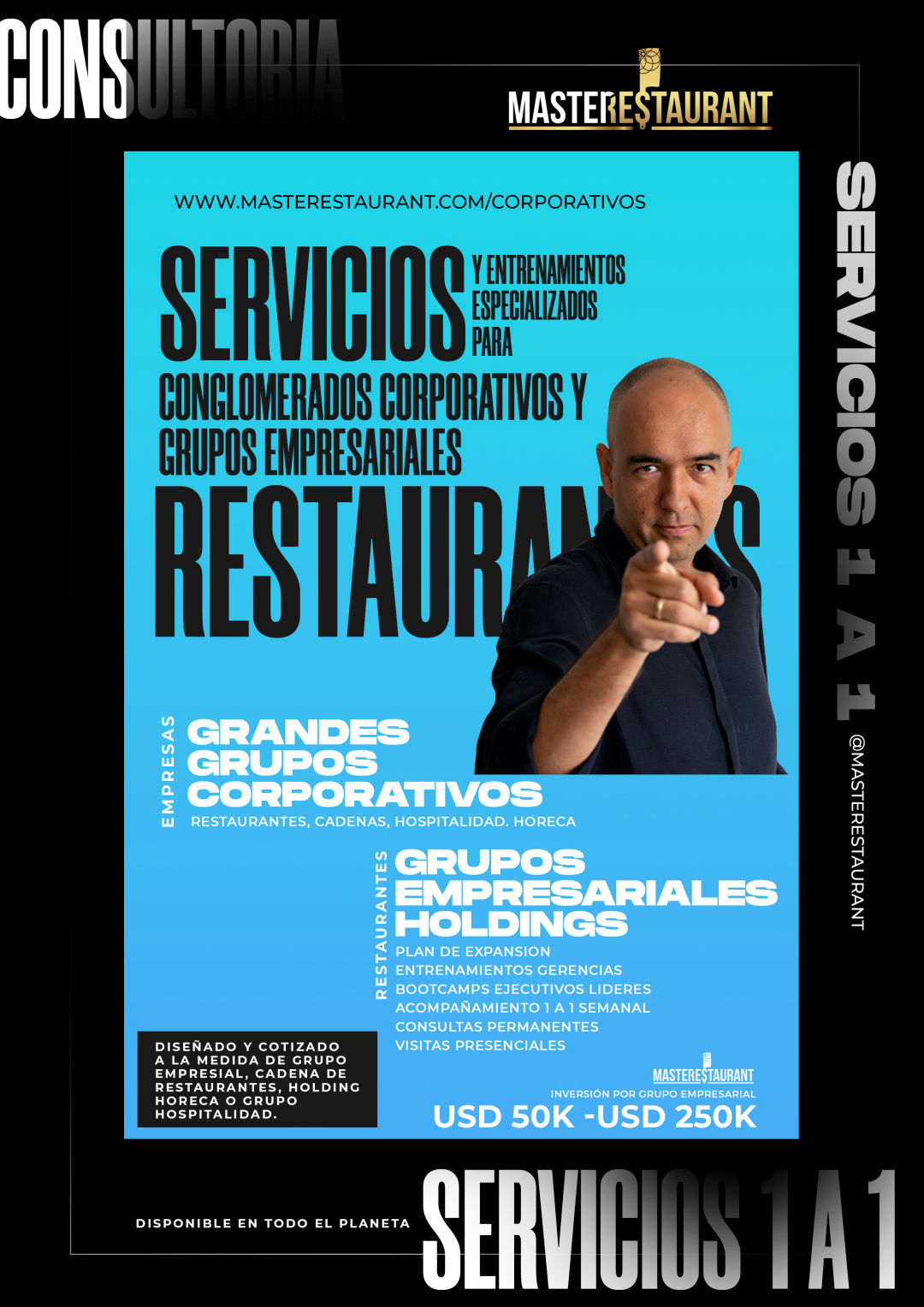
Investment: from USD $50K to USD $500K+ - tailor-made hospitality programs, priced to the group's size and complexity - spots LIMITED worldwide.
Corporate programs
Tailor-made hospitality consulting programs for groups and chains
Every hospitality program is 100% personalized and tailor-made to the group: it starts with a strategic portfolio diagnosis and works through the key elements of the business model in the MASTERESTAURANT Restaurant Canvas - from portfolio strategy and standardization to per-unit profitability and expansion. Priced to the group's size and complexity (from USD $50K to USD $500K+), with limited spots worldwide to protect each client's dedication and discretion.
Corporate coverage
Consulting for hospitality groups near Yokohama
Explore consulting for hospitality groups in other territories, or go back to the worldwide index on the hospitality consulting worldwide page:
We do serve — and every city on the planet
We haven't published that territory's dedicated page yet, but the service is available right there: on-site or virtual, in English and Spanish. Request a quote and you'll get a tailored proposal.
Who is Diego F Parra?
Engineer and C-Suite consultant, Amazon TOP 5 author and creator of the MASTERESTAURANT methodology and its technology suite -MTIE, Gastronomic Radar and KPI Dashboard-, applied by 8,400+ restaurants across 43 countries. He is the consultant that enterprise groups, chains, holdings and family offices choose to grow, standardize and expand their restaurant portfolio with profitability and governance.
HORECA · Chains · Holdings · Foodtech
Private programs for boards and family offices
Consulting, executive bootcamps, events and private, tailor-made advisory for boards, C-Suite and family offices with growing and expanding restaurant portfolios.
Starting at USD $50K - tailor made, priced to the group - limited spots worldwide
Published doctrine
The books that changed restaurant management
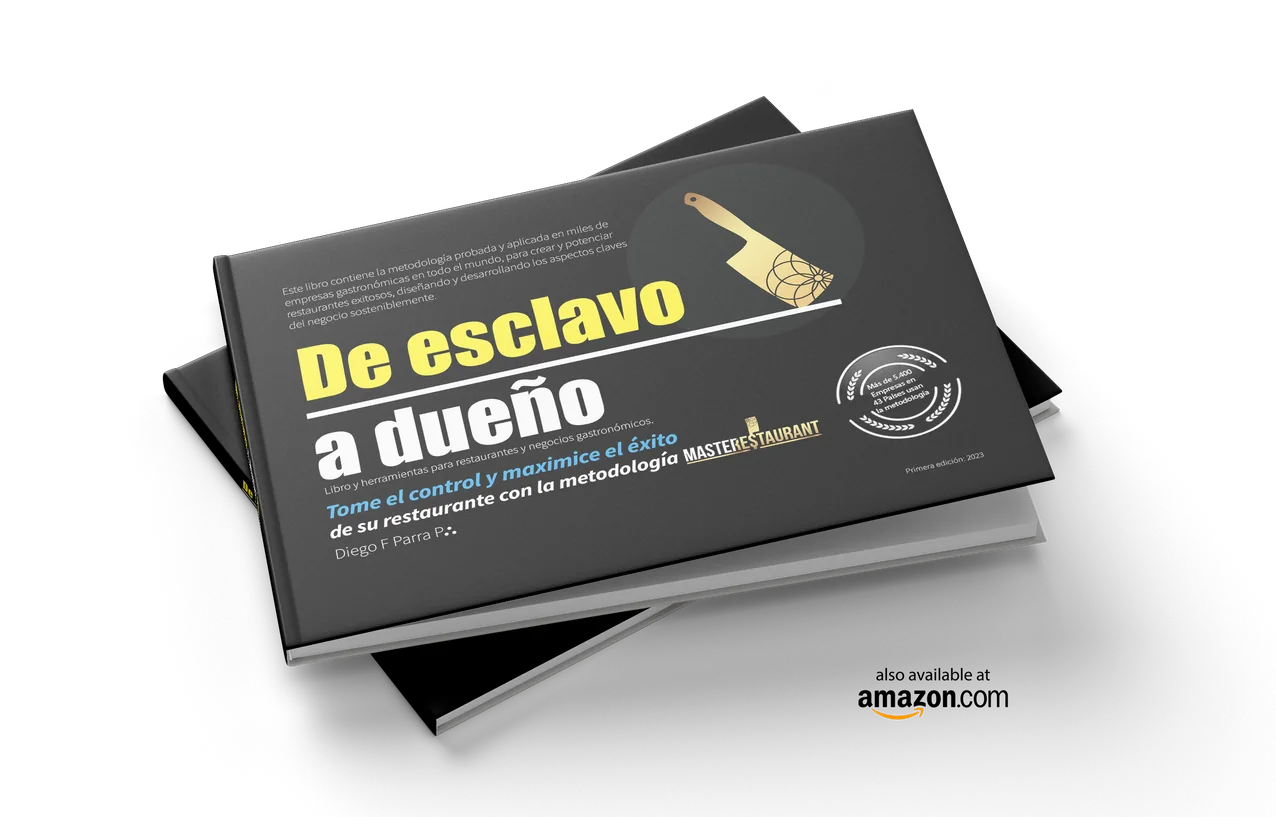
De Esclavo a Dueño AMAZON TOP 5
The book that changed how restaurants are managed: take control and maximize the success of your business with practical strategies and effective tools based on more than 20 years of experience. Amazon TOP 5 bestseller in hospitality and the restaurant industry. Ideal for traditional restaurants, dark kitchens, virtual restaurants, foodtech and HORECA businesses.
Triunfar o Morir en el Intento
Practical tools and key strategies to design and operate restaurants and food businesses efficiently.
Podcast: Masterestaurant — Mistakes for Restaurants
The public autopsy of the mistakes that bankrupt restaurants: tens of thousands of owners and managers listen on Spotify to avoid repeating them. Every episode is condensed operating doctrine, direct, no anesthesia.
Listen on SpotifyDownloads
The documents your board will ask for
MASTERESTAURANT services portfolio
The complete corporate intervention catalog: consulting, executive bootcamps, advisory and specialized services, with scopes and formats. The document to decide with your board.
Download PDFBook: From Slave to Owner
The full doctrine behind the methodology: how to structure restaurants that run without depending on the owner. Ideal pre-reading before your group's diagnosis.
View on AmazonPortfolio
More services by Diego F Parra and his team
If your need goes beyond the group, the full ecosystem is available:
International keynote speakerOne-on-one consulting and advisoryPersonalized mentoring for owners (limited spots)Corporate groups and holdings consultingCelebrity Restaurants consultingThemed restaurant advisorySpecialized training programs52-Week membershipPitch deck and restaurant investment readinessExponential Program0.1 Program — Elevate Your RestaurantInteractive training kit
FAQ
Frequently asked questions
How does hospitality consulting for hospitality groups work?
It starts with a strategic diagnosis of the group and its portfolio of brands and units. Based on it, the growth plan is designed -portfolio strategy, multi-site standardization, per-unit profitability and expansion- and leadership is supported through implementation.
Is the confidentiality of the group's information protected?
Yes. The whole process operates under confidentiality agreements (NDA). The group's financial, operational and strategic information is and remains the client's. Limited spots worldwide exist to guarantee dedication and focus on each organization.
How long does it take and what are the phases of the corporate engagement?
It depends on the group's size and complexity: diagnosis, strategic planning, standardization and implementation, and support during operation and expansion. Scaling a group profitably is a process with method, not an event.
What is the investment for a hospitality program?
Corporate programs range from USD $50K to USD $500K+ and are priced to the group's size and complexity, number of sites and scope of the engagement. They are quoted tailor-made after the diagnosis.
Do you work with growing groups and also with consolidated chains?
Both: expanding groups that need to standardize and get in order before scaling, and consolidated chains seeking to recover per-unit profitability, restructure the portfolio or prepare franchise and new markets.
Direct contact
Get a quote for hospitality consulting for your group in Yokohama
Your message goes straight to Diego's team: group or chain, number of sites, stage and what you need to achieve in Yokohama.
“A hospitality group does not dilute because it expands fast; it dilutes because its business system does not scale. I have seen chains open 20 properties in 3 years and collapse, and groups open 3 properties in 5 years and become 10x more valuable. The difference is not pace—it is governance. That is why consulting for hospitality groups is not about volume; it is about what each unit leaves on the operational table every month.”
Diego F. Parra — International consultant, expert in creating, scaling and improving restaurants, HORECA and hospitality
MASTERESTAURANT® methodology applied by 8,400+ restaurants across 43 countries · Amazon TOP 5 author in hospitality («From Slave to Owner») · 20+ years operating restaurants, franchises, dark kitchens and HORECA groups across 4 continents
Full profile →Your hospitality group in Yokohama deserves a system worthy of its ambition
Tell us the group's size, number of sites and stage, and you'll receive a tailor-made corporate proposal for Yokohama.
Explore more
Restaurant groups: territories, services and ecosystem resources
Related links for boards, C-Suite and teams evaluating Diego F Parra's hospitality consulting for hospitality groups: nearby territories, MASTERESTAURANT ecosystem services and management tools.
World's best restaurant keynote speakerWorld's best restaurant consultantC-Suite restaurant consultant for chains & groupsDiego F Parra — professional profileKeynote speaker serviceCorporate groups & holdings consultingCelebrity restaurant consultingInternational themed restaurant advisoryServices portfolio for hospitality groupsOne-on-one consulting for hospitality groupsMentoring for hospitality groupsMTIE — Territory Engine for hospitality groupsGastronomic Radar for hospitality groupsStandard Recipe Generator for hospitality groups
